Russian Barguzin Sable: The Crown Jewel of Fur
What Is Barguzin Sable?
Before diving into history and value, it’s worth understanding why Barguzin sable occupies a category entirely its own. Sable (Martes zibellina) is a small carnivorous mammal native to the forest regions of Russia and northern Asia. Among all sable, those originating from the Barguzin Valley — a remote, pristine region along the eastern shore of Lake Baikal in Siberia — are universally considered the finest in the world.
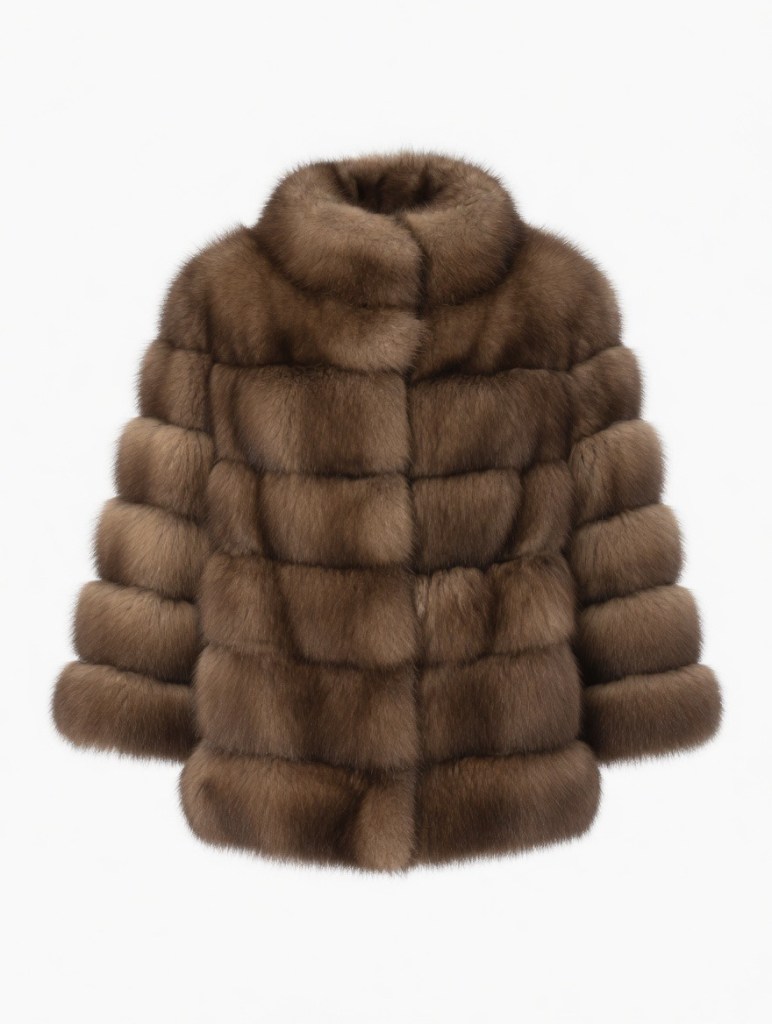
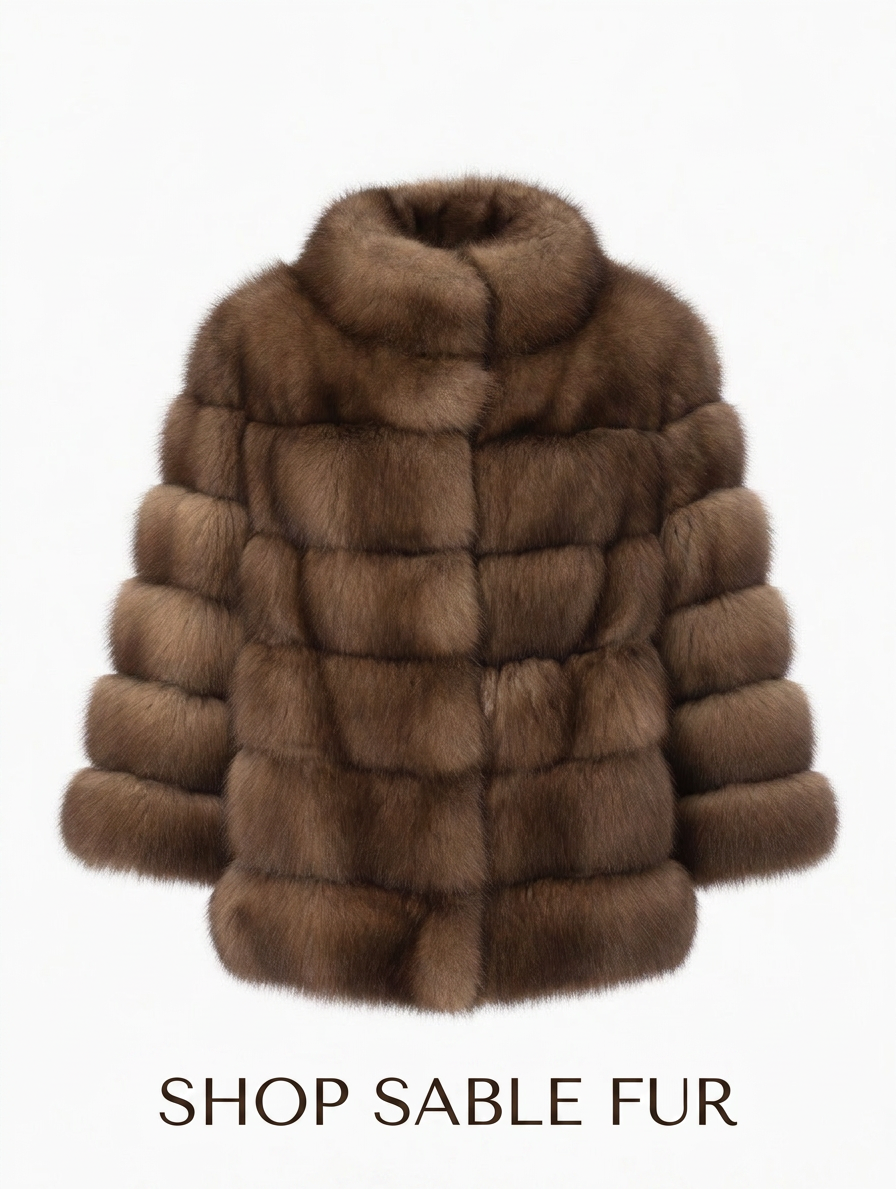
The extreme cold of the Barguzin region produces a fur of unparalleled density, depth, and silkiness. Barguzin sable pelts are characterized by their dark, almost blue-black color, extraordinary softness, and a unique quality where the fur appears to shimmer and change tone as it moves — a phenomenon furriers sometimes call living fur. It is, by virtually any measure, the most luxurious natural fur on earth.
A History Written in Imperial Ambition
The Siberian Fur Trade (16th–17th Century)
The story of Barguzin sable is inseparable from the story of Russia itself. In the 16th century, sable fur — called myagkaya ruhlyad or “soft gold” in Russian — was so valuable that it functioned as currency, tribute, and diplomatic gift simultaneously. When Ivan the Terrible and later the Romanov tsars pushed eastward into Siberia, they were driven in significant part by the promise of sable.
The conquest of Siberia was, to a remarkable degree, a fur conquest. Cossack explorers pushed thousands of miles into unknown wilderness not for gold or land in the first instance, but for sable. Indigenous Siberian peoples were compelled to pay tribute — called yasak — in sable pelts. The Russian state grew wealthy on the back of this soft gold, and sable funded wars, palaces, and the expansion of empire.
By the 17th century, sable pelts accounted for an estimated one third of the entire Russian state revenue. The Barguzin Valley, recognized early as producing the finest animals, was treated as a strategic national resource.
The Imperial Era (18th–19th Century)
Under the Romanov tsars, Barguzin sable became the exclusive province of royalty and the highest aristocracy. The tsar maintained control over the finest pelts, using them as state gifts to foreign monarchs and dignitaries — a sable coat from the Russian court was among the most prized diplomatic presents in the world.
Peter the Great and Catherine the Great both understood the political power of sable. Catherine’s court was legendary for its extravagant use of fur, and Barguzin sable lined the robes of Russian nobility as a visible declaration of rank and imperial favor. To receive sable from the tsar was to receive the tsar’s recognition — it was honor made tactile.
European royalty coveted Russian sable deeply. The courts of France, Austria, and England all prized it, and Russian furriers supplying the European aristocracy grew enormously wealthy. Sable became the fur of kings in the most literal sense — it appeared in coronation robes, state portraits, and the formal dress of virtually every European monarchy.
Near Extinction & Conservation (Early 20th Century)
By the late 19th and early 20th centuries, centuries of intensive trapping had brought the sable — and particularly the prized Barguzin sable — to the edge of extinction. Populations had collapsed dramatically, and the finest animals were becoming nearly impossible to find.
In a remarkable early conservation effort, Tsar Nicholas II established the Barguzin Nature Reserve in 1916 — Russia’s first nature reserve — specifically to protect the sable population of the Barguzin Valley. It remains one of the oldest nature reserves in Russia to this day.
The Soviet government, recognizing the enormous foreign currency value of sable exports, continued and expanded conservation efforts. Sable ranching was developed alongside careful management of wild populations, and by the mid-20th century, numbers had recovered sufficiently to allow controlled trapping and export once again.
Craftsmanship: Making a Barguzin Sable Jacket
A Barguzin sable jacket is among the most labor-intensive garments in existence. The process from pelt to finished jacket involves:
• Pelt selection — Master furriers hand-select each pelt, matching them with extraordinary precision for color depth, fur density, guard hair quality, and sheen. Even among Barguzin sable, there is enormous variation — only the very finest pelts make the cut for top-tier garments.
• Letting out — The finest sable jackets are constructed using a technique called letting out, in which each pelt is cut into diagonal strips just millimeters wide and then resewn at a slight angle. This creates a longer, more fluid drape and makes the seams virtually invisible. A single jacket can involve thousands of individual cuts and seams — a process requiring weeks of skilled labor.
• Matching & assembly — The flow of fur must be perfectly consistent across the entire garment. The direction, density, and color of every pelt must align seamlessly, creating the impression of a single continuous surface.
• Lining & finishing — The finest sable jackets are lined in silk or cashmere, with hand-finished details throughout.
A master furrier may spend 200–400 hours constructing a single Barguzin sable jacket of the highest quality.
Value & Price — Then and Now
Historical Pricing
Barguzin sable has always been among the most expensive materials on earth. In the imperial era, a single top-quality Barguzin pelt could be worth more than a skilled craftsman earned in a year. During the height of the Soviet fur export trade in the mid-20th century, fine sable coats were already commanding prices equivalent to luxury automobiles.
The Modern Market
Today, Barguzin sable jackets occupy the absolute pinnacle of the luxury fur market. Pricing is broadly as follows:
• Entry-level sable jacket (ranch sable, shorter length) — $15,000–$30,000
• Quality wild sable jacket — $50,000–$150,000
• Top Barguzin sable jacket (finest pelts, master construction) — $150,000–$400,000+
• Museum-quality or bespoke Barguzin pieces from the greatest houses — $500,000 and above
For context, the finest Barguzin sable is routinely priced higher per ounce than gold.
Price Increases Over Time
The trajectory of Barguzin sable prices has been relentlessly upward, driven by several converging forces:
Supply constraints — Wild Barguzin sable populations, while recovered from their nadir, are carefully managed and strictly quota-controlled by the Russian government. The number of top-quality wild Barguzin pelts available in any given year is extremely limited. Ranch sable, while producing good fur, does not match the depth and quality of wild Barguzin animals raised in extreme cold.
Geopolitical factors — Western sanctions on Russia following 2014 and especially post-2022 have dramatically complicated the trade in Russian sable. Export restrictions, banking complications, and reputational pressures have reduced supply to Western markets — which paradoxically has driven prices even higher among buyers who can still access them, primarily in Asia and the Middle East.
Asian demand — The emergence of wealthy consumers in China, South Korea, and the Gulf states has created enormous new demand for the world’s finest furs. Asian buyers — particularly Chinese — now dominate the top end of the sable market and have driven auction prices to historic highs. At the Sojuzpushnina auction in St. Petersburg — the world’s premier wild sable auction — top Barguzin lots have seen prices increase by 300–500% over the past two decades.
The rarity premium — As fur wearing has become more controversial in the West, the pool of buyers has narrowed in some markets but deepened in others. Those who still seek the finest sable are typically extremely wealthy and largely price-insensitive — creating a market dynamic where scarcity commands extraordinary premiums.
The Great Furrier Houses
Several names are synonymous with the finest Barguzin sable work:
• Fendi (Rome) — Perhaps the most famous name in luxury fur globally, Fendi elevated sable to high fashion runway status and brought Barguzin sable to a new generation of luxury consumers.
• Revillon (Paris) — One of the oldest and most prestigious furriers in the world, with roots going back to 1723. Long synonymous with the finest Russian sable.
• Blackglama (USA) — While primarily a mink house, Blackglama’s What Becomes a Legend Most campaigns helped define fur luxury in the 20th century.
• Russian state furriers & ateliers — Within Russia, bespoke furriers working directly with Sojuzpushnina auction pelts produce some of the most extraordinary sable pieces in existence, largely unknown outside the country.
Sable vs. Mink — The Hierarchy
It is worth being clear about the hierarchy: within the fur world, sable sits above mink in the same way that a Rolls-Royce sits above a Mercedes. Both are luxury goods by any conventional measure. But Barguzin sable is in a category of its own — rarer, softer, more complex in its beauty, and dramatically more expensive. A top mink jacket might cost $20,000–$50,000. A comparable Barguzin sable jacket begins where mink ends.
The fur world has an old saying: Mink is for the wealthy. Sable is for the truly rich.
Legacy & Meaning
For five centuries, Barguzin sable has occupied a unique position in the human story — simultaneously a wild animal, a geopolitical commodity, an artistic medium, and the ultimate symbol of luxury. It built empires, decorated thrones, funded wars, and nearly vanished from the earth before conservation pulled it back.
Today, a Barguzin sable jacket is more than a garment. It is a piece of history made wearable — the same fur that warmed the shoulders of tsars and empresses, that crossed continents as diplomatic gifts, that Cossack explorers risked their lives to obtain in the frozen wilderness of Siberia. In an age of mass production and fast fashion, it represents the opposite of everything ordinary — rare, handmade, irreplaceable, and steeped in centuries of human ambition and desire.
 ROJE ASPEN