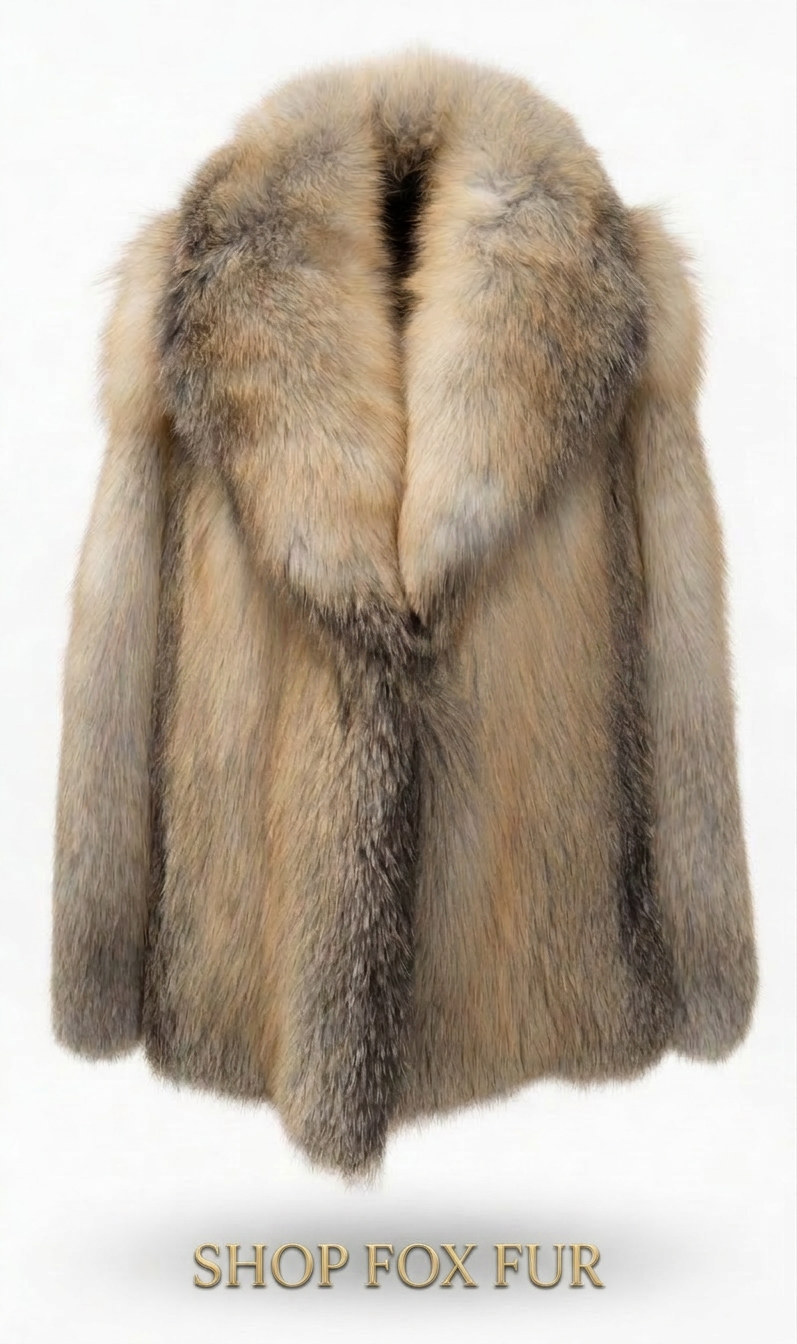
Finnish Fox Fur
Finland is one of the world’s foremost producers of high-quality fox fur, with a fur farming industry that has developed over decades into a globally recognized center of excellence. Finnish fox fur — particularly from blue fox (Vulpes lagopus, the Arctic fox) and silver fox (Vulpes vulpes) — is prized by luxury fashion houses and furriers worldwide.
History of Fox Farming in Finland
Fox farming in Finland dates back to the early 20th century, when farmers in the Ostrobothnia region (Pohjanmaa) began domesticating Arctic foxes for their pelts. The industry grew steadily through the mid-1900s, and by the 1980s and 1990s Finland had established itself as the world’s largest producer of fox fur, a position it has largely maintained since.
The Ostrobothnia region, particularly around the towns of Kaustinen, Kauhava, and Pietarsaari, became the heartland of Finnish fur farming, with generations of family farms passing down husbandry knowledge.
Types of Fox Fur Produced
Blue Fox (Arctic Fox)
• The most common breed farmed in Finland
• Known for its dense, soft underfur and long guard hairs
• Natural coloring ranges from white to bluish-grey, but selective breeding has produced a vast palette of colors
• Finnish blue fox pelts tend to be notably larger than those from other countries, a result of careful selective breeding
Shadow Fox & Color Variants
• Finnish breeders are renowned for developing dozens of color mutations, including platinum, pearl, sapphire, and shadow varieties
• These unique colorways command premium prices in international markets
Silver Fox (Red Fox)
• Also farmed in Finland, though in smaller numbers than blue fox
• Produces a striking black pelt with silver-tipped guard hairs
Quality & Characteristics
Finnish fox fur is internationally recognized for several distinguishing qualities:
• Size — Finnish blue fox pelts are among the largest in the world, the result of decades of selective breeding
• Density — The cold Nordic climate encourages the growth of exceptionally thick, full fur
• Softness — The underfur is particularly fine and plush
• Color consistency — Finnish farms are known for producing uniform, well-matched pelts suitable for large luxury garments
Saga Furs & International Trade
The majority of Finnish fox pelts are sold through Saga Furs, a cooperative auction house headquartered in Vantaa, Finland. Saga Furs holds several major auctions each year and is one of the world’s leading fur auction houses, alongside Copenhagen Fur (Denmark). The Saga label is recognized globally as a mark of Nordic quality, and Finnish fox fur sold under this brand is found in collections from major fashion houses in Europe, Russia, China, and North America.
Ethical & Regulatory Context
Finnish fur farming operates under EU animal welfare regulations, which set minimum standards for housing, feeding, and the treatment of farmed animals. Finland has also implemented its own national guidelines.
Cultural & Economic Significance
For the Ostrobothnia region especially, fox fur farming has been a cornerstone of rural livelihoods for generations. At its peak, Finland produced millions of fox pelts annually, making fur one of the country’s notable agricultural exports. While the industry has contracted in recent decades due to ethical concerns, market shifts, and disease outbreaks, it remains a meaningful part of Finland’s agricultural and cultural heritage.
Finnish fox fur continues to represent a benchmark of quality in the global luxury fur trade — shaped by cold Nordic winters, generations of breeding expertise, and a well-organized international marketing infrastructure.

