Rojé Leather: An American Exotic Leather House
Who Is Rojé Leather?
Rojé Leather is a specialist in premium wholesale leather goods, focusing on exotic animal skins including alligator, crocodile, ostrich, and python. We serve designers, established brands, startups, and boutique owners by offering consultation, material sourcing, and labor for custom production.
Operating from Colorado, Rojé occupies a distinctive and important position in the American exotic leather market — functioning simultaneously as a raw skin supplier, a tannery partner, a production house, and a wholesale distributor. This breadth of service makes it a resource unlike most other players in the luxury leather space, which tend to specialize in only one dimension of the supply chain.
The Crocodile Offering
Species & Sourcing
Rojé offers top-quality first and second grade Porosus, Freshwater, and Nile Crocodile skins in crocodile belly, crocodile hornback, and crocodile backstrap cuts. The company processes, tans, and finishes genuine crocodile hides both in the United States and abroad, striving to offer the absolute best crocodile skins at fair market prices through partnerships with the best farmers, hunters, and tanners worldwide.
The Finish Portfolio
Rojé offers crocodile leather in a range of finishes including glazed, matte, garment grade, suede, and glazed classic. This breadth of finishing options is significant — it means a designer or manufacturer can source from Rojé not just for basic production leather but for highly specific aesthetic requirements. A fashion house requiring matte Nile crocodile in navy for a handbag line, or a garment designer needing ultra-thin garment-grade porosus in black, can find both within the same supplier relationship.
The color range is exceptionally broad. Rojé can produce any color in matte or glazed with an order of four skins per color — a level of flexibility that gives designers enormous creative latitude without the minimum order requirements that larger tanneries typically impose.
Understanding the Grade System
Each species comes in grades 1 through 6 as well as a true garment grade weight. Each species offered carries CITES and Fish and Wildlife clearance, as well as approval for re-exporting to a majority of countries throughout the globe.
The grading system is fundamental to understanding crocodile leather pricing and suitability. Grade 1 skins — the finest available — are reserved for the most demanding luxury applications: handbags, small leather goods, and garments where every inch of the hide is visible and examined closely. Lower grades, while perfectly serviceable for upholstery, furniture, and applications where scale perfection is less critical, are priced accordingly. Rojé’s ability to supply across the full grade range makes it a versatile partner for manufacturers working across different market segments.
Pricing & the Mathematics of Skin Size
One of the most valuable educational contributions Rojé makes to the industry is its transparent explanation of how skin size drives price — a relationship that is often misunderstood by designers new to exotic leather.
Larger skins are exponentially more expensive and valuable due to the rarity of larger skins as well as the cost of producing the hide. The size-to-age relationship runs roughly as follows: 20–24cm skins come from animals approximately 1.0 years on the farm; 25–29cm from 1.5 years; 30–34cm from 2.0 years; 35–39cm from 2.5 years; 40–44cm from 3.0 years; and 45cm and above from animals 3.5 years on the farm.
The longer these animals are on the farm and the larger they become, the more food and care they require. A 2.5-year-old crocodile will eat 2.5 times what it did the previous year. More mature animals also become more aggressive and must be separated into individual pens or grow rooms. Increased demand further raises the price — a 40–44cm hide is the perfect size for a 16-inch wide handbag, which drives the price up further. Farmers must wait three years to raise an animal and produce a finished skin this large, thus driving prices higher.
This pricing structure has direct implications for small leather goods manufacturing. A wallet requiring only small sections of belly leather can be produced from relatively modest skins — but a handbag or larger accessory demanding a wide, unblemished belly panel requires a significantly older and more expensive animal.
The Caiman Distinction: Consumer Protection Through Education
One of the most valuable services Rojé provides to the industry is unambiguous clarity about the difference between true crocodile and caiman — a distinction with significant commercial and ethical implications.
Caiman skins are often labelled as crocodile skins, but the two are distinctly different. While crocodile skin is pliable and smooth, caiman skins are more brittle due to bony plates known as ossifications underneath the scales. In the 1930s and 1940s, caiman was a popular choice for briefcases, handbags, and small leather goods. From the late 1940s through the 1960s, caiman skin imports from South America began appearing in the United States sold as crocodile, when they were in fact caiman. It is the purchaser who is deceived when this happens, and it is important for both a manufacturer and the end user to know the difference.
This educational stance — rare in an industry where such distinctions are sometimes deliberately obscured for commercial advantage — reflects a commitment to transparency that has built Rojé’s reputation among serious manufacturers and designers.
Who Rojé Serves: A Breadth of Application
Fashion & Leather Goods Production
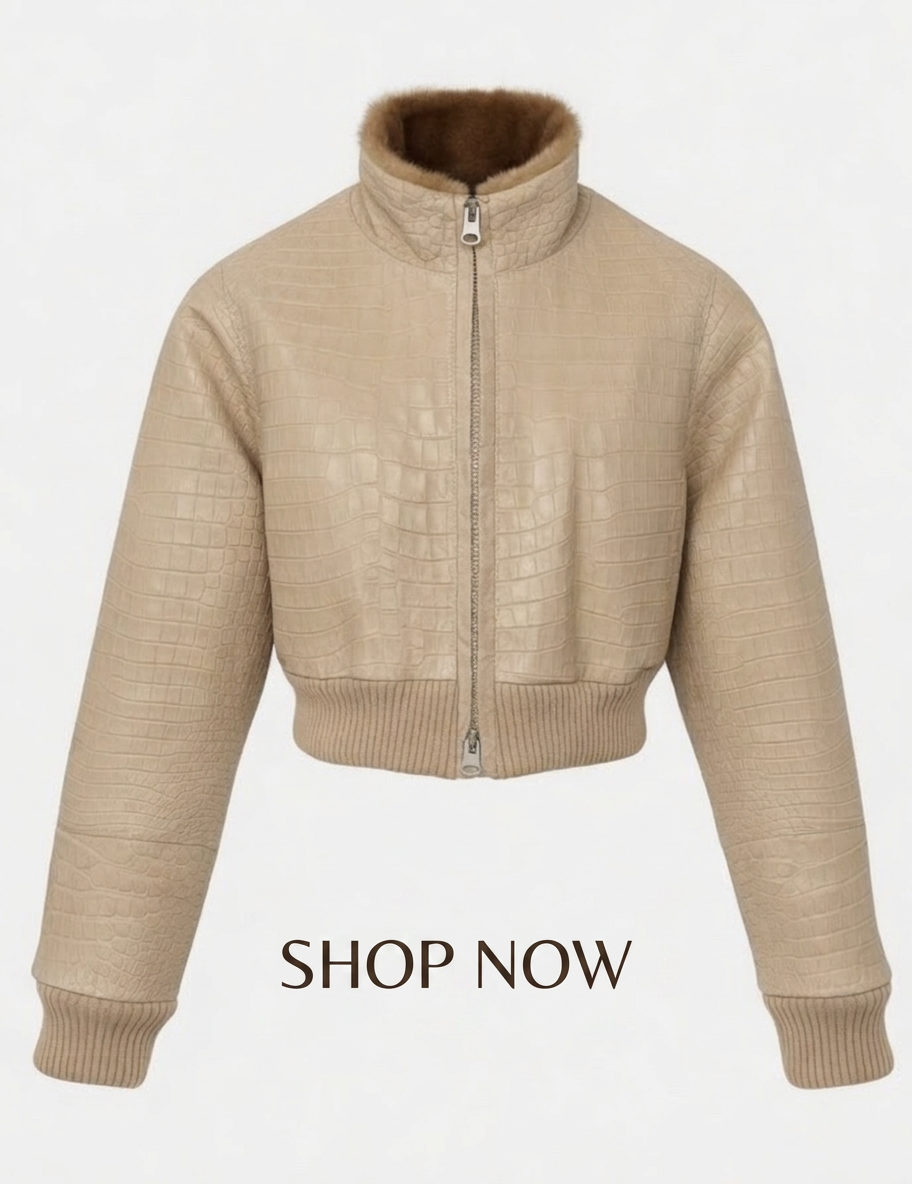
Rojé specializes in stocking garment-tanned alligator, crocodile, ostrich, and python skins specifically tanned for seamless garment projects. Skins for garments should be less than 1mm in thickness and have a significant amount of horizontal stretch; without these qualities, a manufacturer ends up investing in a nonfunctional piece or collection.
Alligator and crocodile skin jackets tend to be most popular, as larger animals have larger skins that cover more area with fewer seams and joints. Rojé prefers not to sell fewer than four 47cm average alligator or crocodile skins per color for women’s projects, and five skins per color for men’s, as these are the minimum amounts needed for medium-sized shorter jackets.
This practical guidance — specifying minimum skin quantities for different garment types — reflects the kind of production knowledge that distinguishes an experienced industry partner from a simple material supplier. A designer ordering insufficient skins for their pattern will waste both time and money; Rojé’s proactive guidance prevents such costly mistakes.
The Luxury Argument
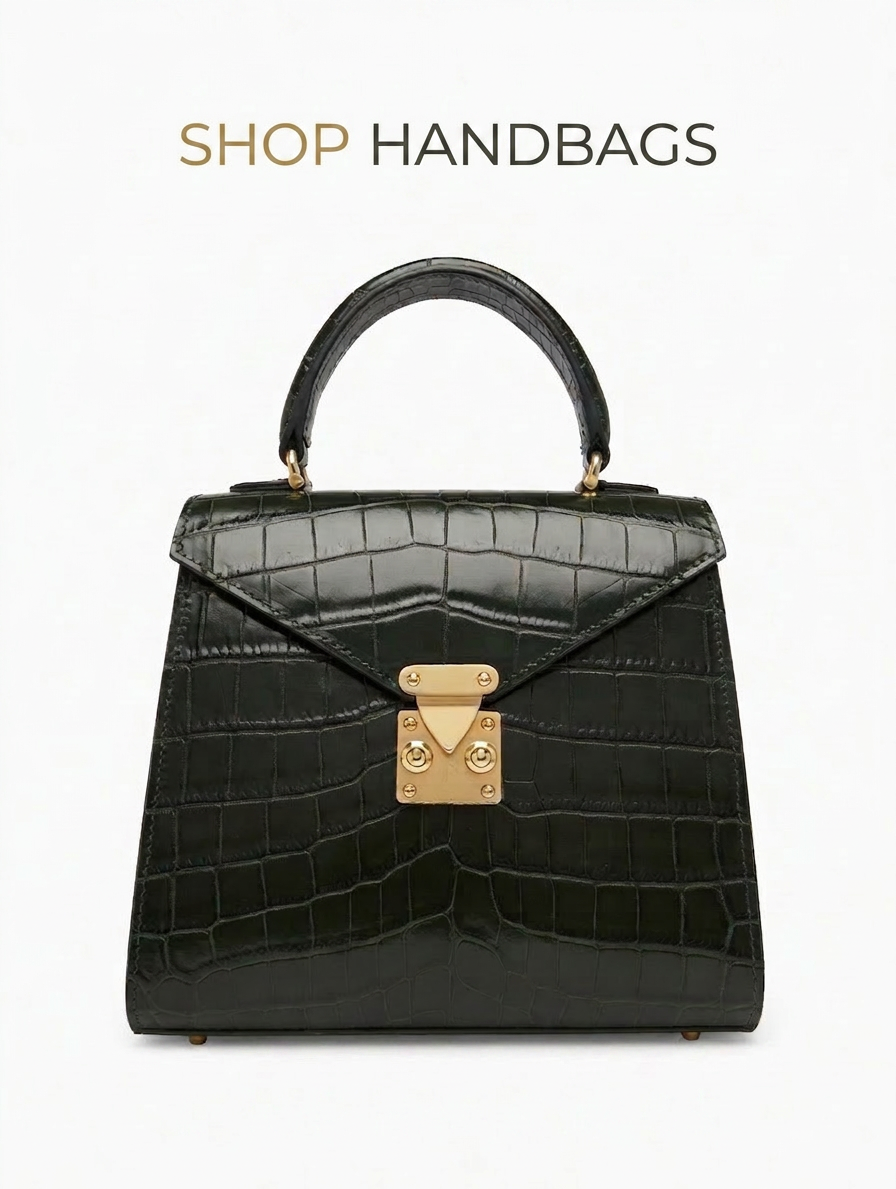
With their intrinsic value as nature’s most beautiful leather, crocodile skins are demanded by all of today’s top fashion brands. Luxury handbag designers have made crocodile their exotic material of choice for their high-end product lines. When properly cared for, crocodile leather goods are the epitome of timeless luxury.
Rojé’s clients separate themselves from other designers who use faux, fake, or embossed leathers or synthetic materials meant to be passed off as the real thing. Rojé offers the opportunity to showcase the most unique materials in custom designs where high-end custom exotic goods are needed — in a homogeneous world, why would anyone want to look like the Joneses?
This philosophy cuts to the heart of what Rojé represents in the American luxury market. It is not simply a material supplier — it is an argument for authenticity, distinction, and the enduring value of genuine natural materials in an age of convincing imitations.
Rojé’s Place in the Broader Luxury Ecosystem
Within the world of exotic leather manufacturing, Rojé occupies a specific and valuable position that the great European houses do not fill. Large fashion houses and their peers are finished goods manufacturers — they source skins, transform them into products, and sell directly to consumers. They do not supply raw or semi-finished exotic leather to third parties.
Rojé operates in the space between the farms and tanneries on one side and the finished goods manufacturers on the other. It is the bridge that allows an independent American designer, a custom automotive atelier, a furniture maker, or a bespoke small goods craftsperson to access the same quality of crocodile leather that the great European houses use — without the scale, the established relationships, or the European presence that would otherwise be required.
For the American bespoke leather goods world in particular — the independent wallet makers, the custom boot makers, the small atelier producing exceptional accessories — Rojé represents an essential resource. With twenty years of experience turning concepts into reality with the finest hand-selected, ethically obtained exotic animal skins from around the globe , the company has established itself as a genuine authority in a field where knowledge, relationships, and standards are everything.
In that sense, Rojé is not just a supplier. It is a custodian of a tradition — ensuring that the extraordinary craft of working with the world’s finest natural leathers remains accessible, well-supplied, and properly understood by a new generation of American makers.
Bespoke Crocodile Leather: The World of Small Luxury Goods
The Art of the Small Object
Within the world of the finest luxury houses and independent ateliers, there exists a quieter, more intimate category of craftsmanship that connoisseurs often regard as the true measure of a leather worker’s skill.
Small leather goods — wallets, card cases, key holders, passport covers, pen cases, watch rolls, desk accessories, eyeglass cases, cigar cases, and the extraordinary miscellany of personal objects that a refined life accumulates — represent the purest expression of leather craft. There is nowhere to hide. Every stitch, every edge, every corner, every transition between materials must be perfect. The object sits in the hand, is examined at close range daily, and reveals its maker’s skill or lack of it with unforgiving clarity.
In crocodile leather, these small objects reach a level of refinement that represents some of the most extraordinary craftsmanship produced anywhere in the world today.
The Pelt & Its Possibilities
Understanding the Hide
Before exploring the goods themselves, it is essential to understand the geography of a crocodile hide and why it matters so profoundly for small leather goods.
A crocodile hide is not a uniform material. Different sections of the same animal produce leather of dramatically different character:
The belly — The underside of the crocodile, from throat to tail, produces the most prized leather. The belly scales are smooth, symmetrical, free of the calcified bone deposits (osteoderms) that stiffen the back scales, and carry the characteristic luminosity that defines fine crocodile leather. The finest belly leather — from the center of the abdomen — is the most supple, most uniform, and most beautiful. This is what the greatest houses use for their finest small goods.
The flanks — The leather running along the sides of the animal transitions from the smooth belly to the rougher back. Flank leather is still excellent quality and is used for a range of goods, offering a slightly different scale pattern that some clients specifically prefer.
The back — The dorsal side carries the larger, more dramatic hornback scales. These are stiffer due to bone deposits but carry a powerful, architectural quality. Hornback crocodile — used in small goods and accessories — produces a dramatically different aesthetic from belly leather, bold and almost geological in appearance, favored by clients who want something more assertive.
The head & tail — Smaller pieces from the extremities of the hide are used for details, trim, and small accessories where their distinctive scale patterns add visual interest.
A skilled small goods maker understands this geography intimately and makes precise decisions about which part of which hide is best suited to each specific object — decisions invisible to the casual observer but fundamental to the finished piece.
Skin Selection for Small Goods
For bespoke small leather goods, pelt selection is an even more exacting process than for larger pieces. A wallet or card case may use only a few square inches of leather, but those square inches must be perfect — the scale symmetry, the color consistency, the surface quality, and the suppleness must all be flawless.
The finest bespoke makers maintain their own pelt inventories, selecting only the highest grades from specialist tanners and sometimes maintaining relationships with specific farms or tanneries over decades. A client commissioning a full suite of matching small goods — wallet, card case, key holder, passport cover, pen case — requires perfectly matched leather from the same hide or at minimum from hides of identical character. Achieving this consistency is itself a significant undertaking.
The Great Tanneries: Where the Craft Begins
Hüsing (Germany) & Täschner Tanneries
The quality of a finished crocodile good depends fundamentally on the quality of the tanning. Raw crocodile skin must be transformed through a complex series of chemical and mechanical processes into leather supple enough to work, stable enough to last decades, and beautiful enough to satisfy the world’s most demanding clients.
Lagaune (France)
Among the most revered names in exotic leather tanning, French tanneries working with crocodile have supplied the great Paris houses for generations. The specific tanning formulations — the chemistry of the baths, the duration of processes, the finishing techniques — are closely guarded secrets representing generations of accumulated knowledge.
Pirarucu & Specialist South American Tanners
Specialist tanners in Brazil and other South American countries have developed particular expertise with specific crocodilian species and offer unique finishes unavailable elsewhere.
Heng Long (Singapore)
Heng Long Leather has emerged as one of the world’s most respected exotic leather tanneries, supplying top-tier luxury houses including Hermès with exceptional quality crocodile leather. Based in Singapore with operations across Southeast Asia, Heng Long is widely considered to produce some of the finest tanned crocodile leather in the world — prized for its extraordinary suppleness, color depth, and surface consistency.
The Finish Question
Beyond the basic tanning process, the finish of crocodile leather profoundly affects its character and the kinds of goods for which it is suited:
Glazed/polished finish — The surface is glazed to a high shine using specialized tools and techniques, producing the luminous, almost lacquered appearance associated with the most formal crocodile goods. The Hermès Kelly and Birkin in glazed crocodile are the definitive expression of this finish. It is extraordinarily beautiful but requires careful maintenance and is susceptible to scratching.
Matte finish — The leather is finished without glazing, producing a softer, more textured surface with a subtle natural sheen. Matte crocodile has become increasingly preferred by sophisticated clients for small goods — it is more resistant to everyday wear, develops a beautiful natural patina, and has an understated quality that many connoisseurs prefer to the high gloss of glazed leather.
Brushed finish — A variation of matte that produces a particularly soft, almost velvet-like surface texture. Used by certain specialist makers for the most intimate small goods — interiors of watch rolls, the inner surfaces of wallets — where touch is as important as appearance.
The Objects Themselves: A Taxonomy of Excellence
Wallets & Card Cases
The wallet is the most intimate of all leather goods — handled dozens of times daily, carried constantly against the body, and examined at close range every time it is used. In crocodile leather, a perfectly made wallet is among the most quietly extraordinary objects in the luxury world.
The finest bespoke crocodile wallets are distinguished by:
Frame construction — The most refined wallets use a frame construction in which the exterior crocodile skin is worked over an internal structure of vegetable-tanned calf or goat leather. This frame gives the wallet its shape, protects the crocodile exterior from internal stress, and provides the substrate for the interior lining. The precision with which the crocodile is fitted to the frame — particularly at corners and edges — is the primary measure of a maker’s skill.
Corner work — Wallet corners are the greatest technical challenge in small leather goods. The crocodile must be mitered, folded, and adhered at each corner without creating bulk, cracking, or visible seams. The finest makers achieve corners of almost geometric precision — perfectly square, perfectly flat, with no visible transition between the faces of the leather.
Edge finishing — The raw edges of crocodile leather must be burnished, painted, or otherwise finished to produce a sealed, smooth edge that will not fray or deteriorate. The finest edge finishing — using traditional burnishing tools and multiple applications of edge paint in matching or contrasting colors — is an art in itself. A perfectly finished crocodile edge has a glassy, almost ceramic quality.
Interior construction — The interior of a fine crocodile wallet is typically lined in hand-dyed calf leather, French calf, or occasionally silk or suede. The stitching throughout — using waxed linen thread in a saddle stitch applied by hand with two needles — must be absolutely uniform. Machine stitching, which produces an inferior stitch easily identified by trained eyes, is simply not used in the finest bespoke work.
Current pricing — A bespoke crocodile wallet from an independent master maker: $2,500–$8,000. From the finest houses (Hermès, Valextra): $5,000–$15,000+
Passport Covers & Travel Documents
The passport cover in crocodile is a particular specialty of several English houses, reflecting the British tradition of equipping the well-traveled gentleman with impeccable accessories for every dimension of life. A fine crocodile passport cover must protect a document while being as slim and unobtrusive as possible — a technical challenge that requires precise calibration of leather thickness, lining weight, and construction method.
The finest bespoke examples incorporate gilded interior panels, silk lining, and occasionally personalization through blind or gold embossing — the owner’s initials or a small crest applied to the exterior with a heated brass stamp.
Current pricing — $800–$3,500 depending on maker and specification.
Key Cases & Key Holders
The key case — a small folding case that holds keys within a structured leather frame — is among the most technically demanding of all small leather goods in proportion to its size. The mechanics of the key ring attachment, the folding action of the case, and the stress points where the rings attach to the leather all require careful engineering in a piece only a few inches in size.
In crocodile, a key case must also manage the particular challenge of the scale pattern across a small, complex three-dimensional form. Matching the scales across the fold of the case, ensuring the pattern flows correctly across all faces of the finished object, requires precise planning at the cutting stage.
Hermès produces crocodile key cases of extraordinary refinement — the Clés series in crocodile represents one of the house’s most perfect small objects, priced from $2,000–$5,000.
Watch Rolls & Watch Cases
The watch roll — a cylindrical or flat case for storing and traveling with fine watches — represents a particular intersection of the leather goods and horology worlds. The finest watch rolls in crocodile are among the most luxurious travel accessories in existence, combining extraordinary material with construction that must protect objects worth far more than the case itself.
A well-made crocodile watch roll must achieve:
Interior cushioning — The watch pillows must be sized precisely for specific watch families, covered in the softest possible material (typically suede or chamois), and structured to hold the watch securely without pressure on the crystal or case.
Closure precision — Whether using a stud and loop, a tie, or a precision press stud, the closure must be smooth, positive, and exert no pressure on the watches inside.
Exterior perfection — The exterior crocodile must be worked with all the precision of a wallet, with the additional challenge of managing a cylindrical or complex curved form.
Independent makers specializing in watch accessories — including Aevitas in the UK and several Swiss ateliers — produce bespoke crocodile watch rolls of extraordinary quality, sometimes commissioned by major watch houses as companion pieces to their most important timepieces.
Current pricing — $3,000–$15,000 for a single watch roll; multi-watch cases significantly more.
Desk Accessories: The Personal Landscape
The crocodile desk accessory — pen trays, blotter corners, letter openers, memo pads, paperweights, ink bottle covers, desk clocks, photograph frames — represents a category with a long and distinguished history that has become increasingly rare and correspondingly precious.
In the mid-20th century, a leather-covered desk was a standard feature of the most distinguished offices and studies. Asprey, Smythson, Mark Cross, and numerous specialist houses produced complete desk sets in crocodile — sometimes running to a dozen or more matching pieces — for wealthy private clients. A complete matching crocodile desk set today, particularly a vintage example from a great house, is among the most sought-after objects in the decorative arts market.
Asprey of London — founded in 1781 and holding Royal Warrants — remains one of the few houses still producing bespoke crocodile desk accessories of the highest quality. An Asprey crocodile desk set commissioned to a client’s personal specification — perhaps incorporating the client’s coat of arms, a specific color scheme, or particular pieces designed around their specific needs — can run to $50,000–$200,000 for a complete suite.
Cigar Cases & Accessories
The crocodile cigar case occupies a particular place in the world of bespoke small goods — it is a deeply personal object, associated with specific rituals of pleasure, and the finest examples are made to hold specific cigars in specific quantities with a precision that approaches watchmaking.
A properly made crocodile cigar case must:
• Hold its specific cigars without crushing or marking them
• Maintain consistent humidity through its leather walls
• Open and close with a positive but gentle action
• Age beautifully through handling and use
The finest bespoke cigar cases in crocodile are made by a handful of specialist makers — including several Cuban-heritage craftspeople in Florida and a small number of English and Swiss ateliers — and are commissioned by serious cigar collectors as both functional objects and works of art.
Current pricing — $2,000–$8,000 for a single cigar case; matched sets of case, cutter, and lighter cover significantly more.
Eyeglass Cases
The crocodile eyeglass case is a masterclass in structured leather construction. It must be rigid enough to protect its contents, lightweight enough to carry comfortably, and beautiful enough to be displayed. The interior must be lined in the softest possible material — typically suede or brushed calf — to protect delicate lens surfaces.
The finest bespoke examples are built over a formed shell of vegetable-tanned leather shaped precisely to the client’s specific eyeglasses — ensuring a perfect fit that holds the glasses securely without movement. The crocodile exterior is applied over this shell with the same precision as a wallet, with perfectly worked corners and edges.
Current pricing — $800–$3,000 for bespoke crocodile eyeglass cases.
The Bespoke Commission Process
How a Commission Begins
The process of commissioning a bespoke suite of crocodile small goods from a specialist atelier typically begins with a consultation — in person wherever possible — at which the maker and client discuss:
Purpose and use — How will each piece be used? What are the client’s specific carrying habits, preferences for card capacity, note organization, key management? A wallet made for someone who carries primarily cards and minimal cash is constructed quite differently from one carrying banknotes in multiple currencies.
Skin selection — The maker presents options from their current pelt inventory — belly versus hornback, glazed versus matte, natural color versus dyed, different species. The client handles samples and makes selections.
Color — Natural crocodile colors range from pale champagne through warm tans and mid-browns to deep charcoal and near-black. Many bespoke makers also offer custom dyeing — achieving specific colors to match existing pieces in a client’s collection, or creating entirely new color combinations. Custom color work adds significantly to both time and cost.
Interior specification — Color and leather type for interior linings, thread color, any gilded or embossed personalization.
Timeline and delivery — The finest bespoke work takes time. A complete suite of matched small goods from an independent master may take 3–6 months from commission to delivery.
Personalization: The Final Distinction
The ability to personalize — to make an object that exists nowhere else in the world in precisely its form — is the defining characteristic of true bespoke work. In crocodile small goods, personalization takes several forms:
Monogramming — Initials applied to the exterior through blind embossing (pressed without color, creating a subtle tactile impression) or gold tooling (using gold leaf and a heated brass stamp). Gold tooling on matte crocodile produces a result of extraordinary elegance — the gold picking up the scale pattern of the leather and catching light from within the impression.
Heraldic embossing — For clients with coats of arms, a heraldic device can be embossed or tooled onto crocodile small goods with extraordinary precision using custom-made brass stamps. A complete crocodile desk set bearing a family crest — embossed in gold on every piece — is among the most personal luxury objects imaginable.
Custom color combination — Specifying a particular exterior color paired with a contrasting interior — midnight blue exterior with cream calf interior, for instance, or black crocodile with scarlet silk lining — creates a piece that is instantly personal and identifiable.
Scale placement — At the highest level of bespoke work, a maker will plan the placement of the scale pattern across the finished object with the same attention a gem setter gives to stone placement — ensuring the most symmetrical, visually balanced presentation of the natural pattern.
The Investment Dimension
Bespoke Crocodile as Value Store
Unlike mass-produced luxury goods — even very expensive ones — bespoke crocodile small goods from great houses and independent masters hold their value with remarkable tenacity and in many cases appreciate over time.
The factors driving this are consistent with the broader crocodile market:
Genuine scarcity — A bespoke piece made to a specific client’s specification exists in an edition of one. There is no secondary production run, no possibility of acquisition elsewhere.
Material value — The finest crocodile leather in the piece has an intrinsic commodity value independent of the finished object.
Craft value — The hundreds of hours of skilled human labor embedded in a masterwork of small leather craftsmanship represent a cost that can only increase as skilled craftspeople become rarer.
Provenance — A bespoke piece with documented commission history from a great maker carries a provenance that increases its value and desirability over time.
Vintage crocodile small goods — particularly complete matched sets from houses like Asprey, Hermès, Swaine Adeney Brigg, and Mark Cross — appear regularly at the major auction houses and consistently achieve prices significantly above their original retail cost when in excellent condition.
The Future of Bespoke Crocodile
The Shrinking World of Masters
The world of truly skilled bespoke leather craftspeople working with exotic skins is small and contracting. The training required — typically 5–10 years of intensive apprenticeship before independent mastery — is formidable, and relatively few young craftspeople are following this path in an era of digital careers and fast fashion.
The great houses address this through their own training programs — Hermès’s École Hermès des Savoir-Faire trains craftspeople internally, embedding the house’s methods over years before they touch exotic skins. Independent ateliers are more vulnerable, and several great makers of the 20th century have closed without successors.
This contraction of human skill is itself a driver of value — objects made by a diminishing pool of masters in a material of finite supply can only become rarer and more precious over time.
The New Collectors
A new generation of collectors — younger, globally distributed, highly informed through digital communities — is discovering bespoke crocodile small goods with fresh enthusiasm. Communities dedicated to fine leather goods, watches, and personal accessories have created informed audiences who understand the difference between a machine-made crocodile wallet from a fashion house and a hand-constructed masterpiece from an independent atelier.
This informed demand — concentrated among people of significant means who understand exactly what they are buying — is creating new commissions, new documentation of makers and methods, and a new chapter in the long story of crocodile leather craftsmanship.
A Final Reflection
There is something profoundly human about the creation of a perfect small object. A wallet made by a master craftsperson from the finest crocodile leather — every stitch placed by hand, every edge burnished to glass, every corner mitered with geometric precision, the client’s initials pressed in gold on the exterior — is not merely a functional item. It is an argument, made in material form, that beauty and utility are not opposites, that the objects of daily life deserve the same care and attention as any work of art, and that there remains in our accelerated, disposable world a place for things made slowly, skillfully, and with the intention of lasting forever.
The finest bespoke crocodile small goods ask to be used — to be handled, worn, and carried until they acquire the patina of a life well lived. Unlike a painting hung on a wall or a sculpture placed on a pedestal, they go everywhere their owner goes, witness everything, and grow more beautiful with every year of use. That quality — of an object that lives alongside its owner and improves with time — is perhaps the deepest luxury of all.

